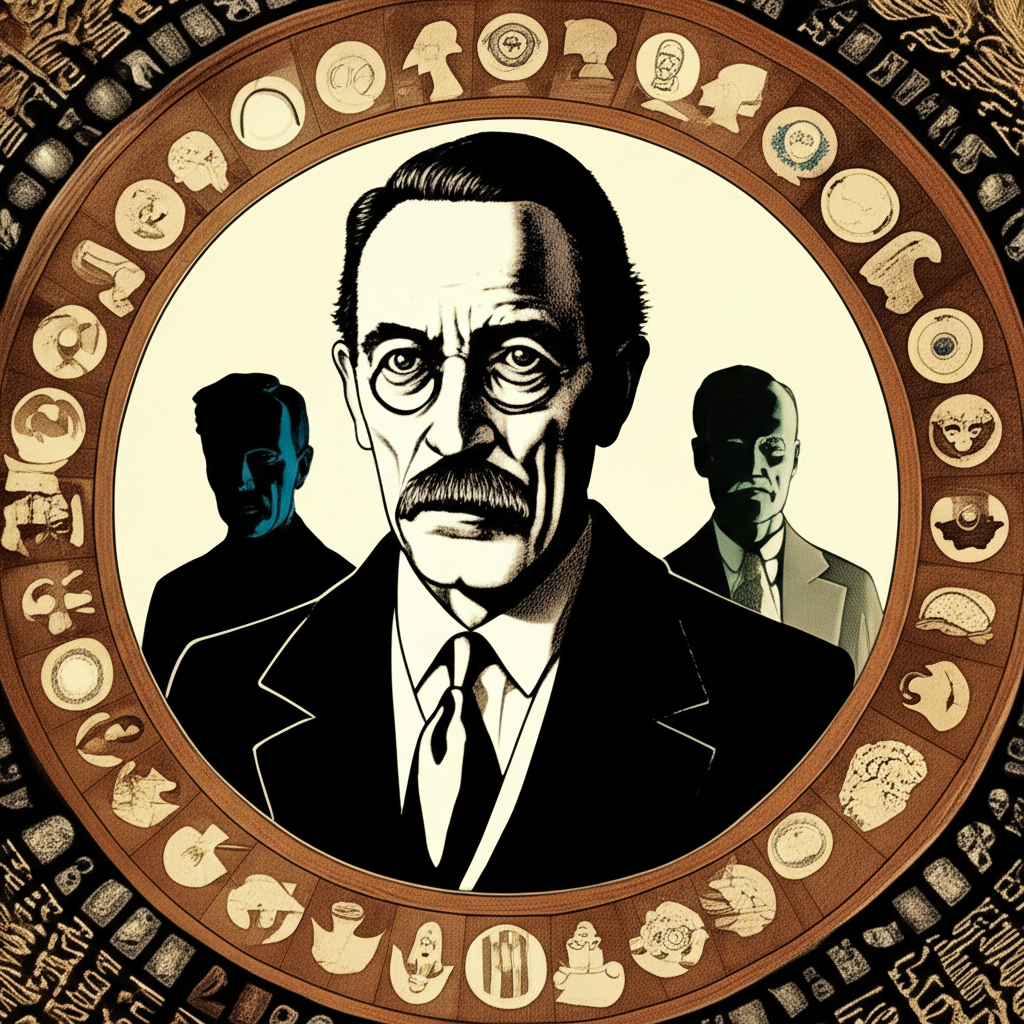
**Unveiling the Hidden Self: The Foundations of Shadow Work**
Shadow work, a transformative journey into the depths of the subconscious, begins with understanding its historical and theoretical underpinnings. Born from the rich soil of psychoanalytic tradition, shadow work has evolved, primarily shaped by the visionary psychologist Carl Gustav Jung. This section explores these foundations, providing a crucial backdrop for anyone embarking on this profound endeavor.
### The Genesis of the Shadow Concept
The concept of the shadow emerged from the work of Sigmund Freud, who first pioneered the notion of the unconscious mind. Freud proposed that the psyche is a battleground between the conscious and the unconscious, a dynamic landscape of hidden desires and conflicts. However, it was Carl Jung, a former protégé of Freud, who expanded and deepened the exploration of the psyche, with the shadow as a central component.
For Jung, the shadow represents the unconscious parts of the personality that the conscious ego does not identify with. These are often undesirable traits, impulses, or feelings that are repressed or denied, and thus, live in the background of our conscious lives. Jung believed that everyone has a shadow, and this shadow is a source of both creativity and destruction.
### Carl Jung’s Contribution to Shadow Work
Jung's theory posits that integrating the shadow is essential for achieving a wholly realized self, a state he referred to as individuation. Individuation is the process of becoming your true self by harmonizing the discord between the conscious ego and the unconscious mind. Engaging with the shadow, therefore, is not just about uncovering hidden darkness; it is about embracing all aspects of the self to foster growth and authenticity.
According to Jung, the shadow manifests in various subtle and overt ways. It might appear in dreams as figures or symbols, indicating unresolved aspects of our personality. Or it might project onto others, a mechanism where traits we dislike in others reflect traits we deny in ourselves. Recognizing this projection is a critical step in shadow work, as it allows us to reclaim these projections and realign our self-perception.
### Historical Context and Evolution
Shadow work didn’t remain confined within the boundaries of Jungian psychology. It has resonated with and been incorporated into various spiritual and therapeutic practices across cultures. From the ancient wisdom of Taoism, which speaks of yin and yang balance, to modern-day therapeutic models focusing on self-compassion and integration, shadow work has proved timeless and adaptable.
Moreover, the remnants of shadow culture can be traced through myths and literature. Stories and folklore, from Greek mythology’s many cautionary tales to the archetypes within classic literature, often depict characters facing their shadows, underscoring humanity’s perennial struggle with the unacknowledged self.
### The Importance of Shadow Work Today
In contemporary settings, shadow work has gained traction, particularly as a means of personal development and spiritual enrichment. In an era that often emphasizes external validation and polished personas, the authentic embrace of the shadow can lead to greater self-acceptance and psychological freedom.
Crucially, shadow work helps in cultivating self-awareness and emotional intelligence. By shedding light on the unseen aspects of ourselves, we break patterns of behavior that impede progress and develop a more compassionate understanding of the human experience.
In conclusion, understanding the historical and theoretical constructs laid down by pioneers like Jung allows us to appreciate shadow work not merely as a psychological tool but as a journey toward wholeness. As we continue into subsequent sections, remember that engaging in shadow work is a gradual, introspective process, requiring patience, courage, and an open mind.